
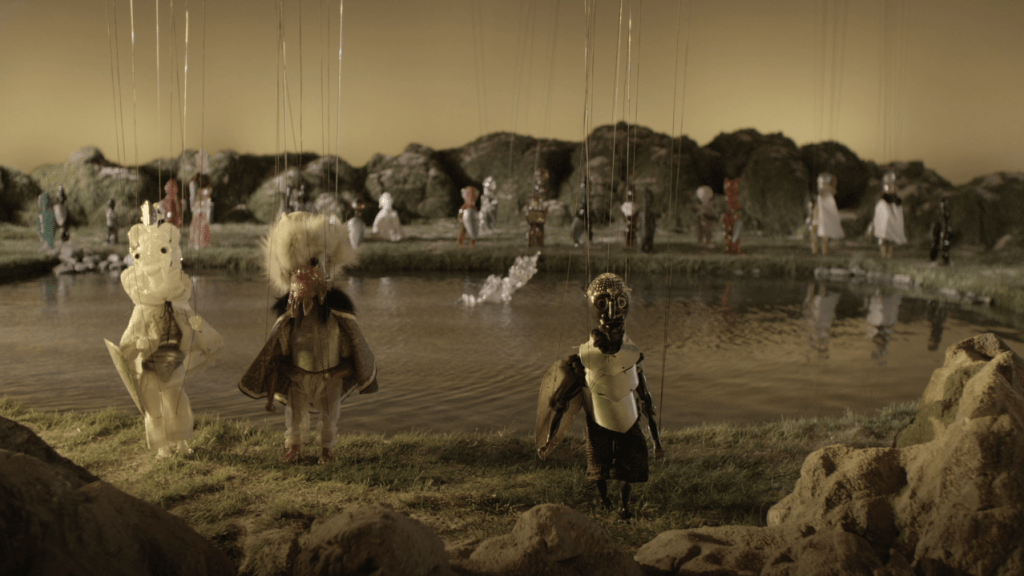
Wael Shawky is an Egyptian playwright, filmmaker, composer, and artist known for his use of puppetry.
Why puppets? To Shawky, they bring a sense of childlike wonder to potentially bleak stories, from lengthy historical epics to fresh contemporary anecdotes.
As a result, Shawky has staged several, puppeteered recreations of these stories. He does so with a deliberate focus on spirituality, Arab identity, and fable-like storytelling techniques. His most famous subject is the First Crusade (1095-1099), a set of religious wars initiated by the Roman Catholic Church against Muslim-controlled Jerusalem, whereupon he draws from Arab historians’ accounts. These accounts are often overlooked.
Shawky is not limited to puppetry nor medieval past, and he consistently keeps Arab identity at the forefront of his work. He has written, choreographed, and directed a musical surrounding the Urabi revolution, conducted research for a documentary of oil production in the Persian gulf, and premiered theatrical installations performed in the Arabic language. Like a journalist, he has also interviewed children and “cast” them in his works—getting critical thoughts on their changing world.

Shawky has stated about his work: “It is societies—their entire worldviews—and not human individuals who are the main characters here.”
Highlighted in these words are his core themes: worldviews of identity and the stories of society, new and old.
Museum Walkthrough: Watch a clip of Cabaret Crusades: The Horror Show Files, the first film of the series, through the curator’s camera!
Discussion Questions
- Why do you think Shawky uses puppets in his works? In other words, what is the importance of the puppets, and how do they suit his intended audience?
- What does Shawky’s focus on Arab identity, as seen in his depictions of The Crusades, say about current historical narratives?
- What are they missing?
- What do they gain from Shawky’s contributions?
- Is it important to create “counter-narratives” of history to counter old ones? Why or why not? How do you see them play out in everyday life?
 THE LYCEUM
Leave a comment